

How Is NDIS Transport Funding Paid?
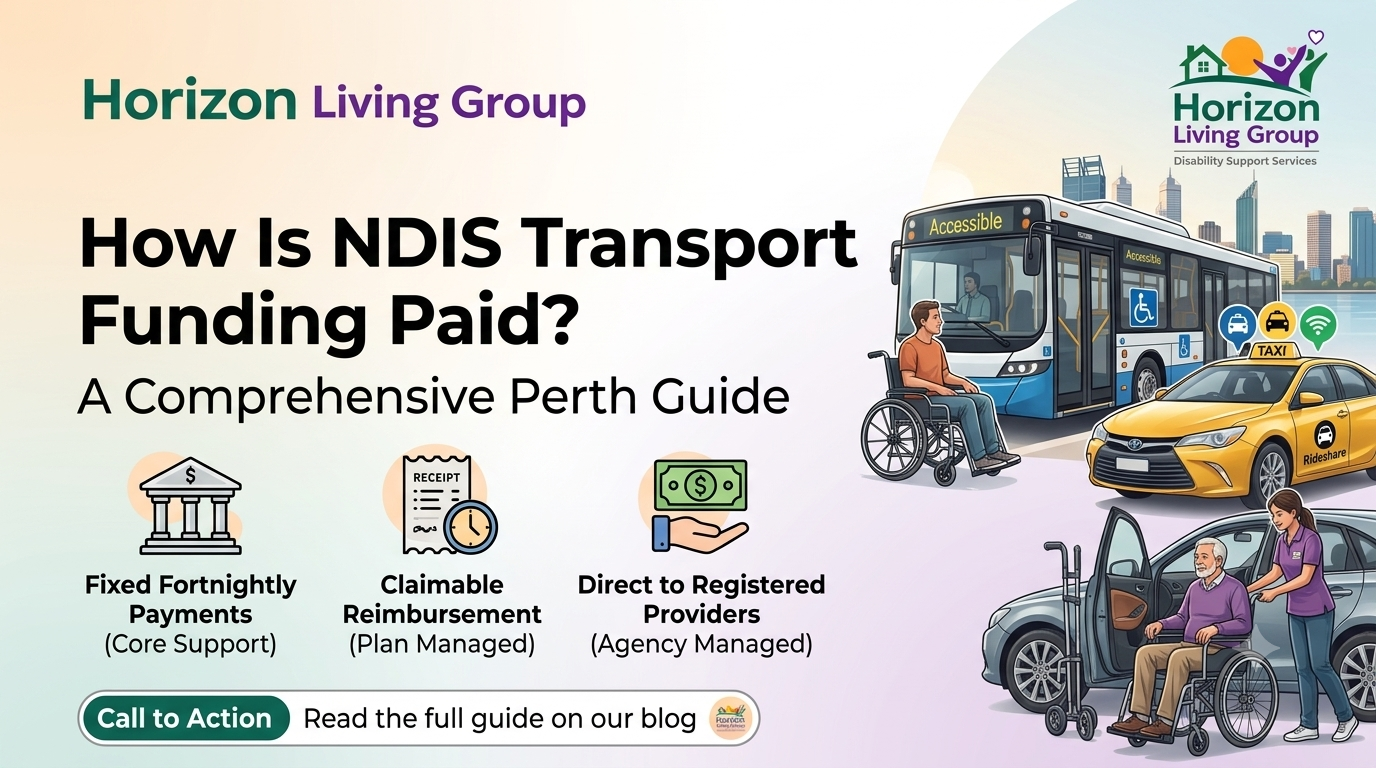
NDIS transport funding is paid in one of three ways: as a fortnightly fixed payment added to your Core Support budget, as a claimable amount under Assistance with Travel or Transport for support workers, or through Plan Managed or Self Managed arrangements where you pay first and claim the cost back. The exact method depends on your plan type and how your funding was assessed by the NDIA.
If you live in Perth and rely on NDIS transport Perth services to get to appointments, work, or community activities, understanding how this payment actually works can save you a lot of confusion later on.
Key Takeaways
Before we go deep into the details, here is a quick summary you can rely on.
NDIS transport funding usually appears as a set fortnightly amount in your Core Support budget.
The amount you receive depends on how much you work, study, or attend community activities.
Plan Managed and Self Managed participants often have more flexibility with providers offering NDIS travel assistance Perth.
Agency Managed participants have less flexibility since funding is paid directly and only through registered providers.
Transport funding cannot usually be used for general Support Coordination or therapy costs, since it is a separate line item.
Local providers offering NDIS support services Perth can help you understand your specific plan and how the funding applies to your situation.
What Is NDIS Transport Funding?
NDIS transport funding is financial support included in a participant’s plan to help them get to places they cannot easily reach using public transport. This includes medical appointments, workplaces, educational institutions, and community or social activities.
The National Disability Insurance Agency, or NDIA, includes this funding under Core Supports, specifically within the category called Assistance with Travel or Transport. It is designed for people whose disability makes it difficult or unsafe to use trains, buses, or to walk to their destination.
This is different from Assistive Technology transport supports, which cover things like modified vehicles or mobility equipment. Transport funding is about the actual cost of travel, not equipment.
How Does NDIS Transport Funding Get Paid?
There are generally three payment structures, and knowing which one applies to you makes a real difference.
Fixed Fortnightly Payments
Most participants receive their transport funding as a fixed amount paid every two weeks straight into their nominated bank account. This is the most common method and gives participants full control over how they use the money, whether that means catching taxis, using rideshare apps, or paying a support worker to drive them.
The amount is based on a set formula that looks at how much community participation, work, or study a person engages in. The NDIA groups this into levels, and the payment reflects the level assigned in your plan.
Claimable Reimbursement Through Plan Management
If you are Plan Managed, a plan manager handles the payments on your behalf. You pay for the transport cost yourself, whether that’s a taxi fare or a support worker’s travel time, then submit the invoice to your plan manager for reimbursement.
This method works well for participants who want flexibility in choosing providers offering NDIS travel assistance Perth without being locked into NDIA registered providers only.
Agency Managed Payments
For participants who are Agency Managed, the NDIA pays registered providers directly. You cannot use unregistered transport providers under this arrangement, and there is less flexibility in how funds are spent. This method suits people who prefer things to be handled entirely by the agency without extra paperwork on their end.
What Determines How Much Transport Funding You Get?
The NDIA does not use a flat rate for everyone. Instead, they assess a few key factors.
Your level of community, social, or economic participation plays a major role. Someone attending a day program five days a week will likely receive more funding than someone attending occasional appointments.
Your ability to use public transport independently is also considered. If your disability prevents you from catching a bus or train safely, this is factored into your assessment.
Your work or study commitments matter too, since travel to a job or educational institution is treated differently from general outings.
According to the NDIS Price Guide, transport support levels are generally split into tiers, with higher tiers receiving larger fortnightly payments for participants who need more frequent travel assistance.
Can NDIS Transport Funding Be Used for Any Type of Travel?
Not exactly. The funding is meant for travel related to disability support needs, not for any and every trip.
It typically covers travel to medical appointments, therapy sessions, community access activities, employment, and education. It generally does not cover holidays, general leisure travel unrelated to your goals, or costs that overlap with support worker travel time, which is billed separately under certain support items.
If you are unsure whether a specific trip qualifies, speaking with a provider offering NDIS support services Perth can clear up any confusion quickly, since local providers often deal with these questions daily.
Why Do Some Participants Get More Funding Than Others?
This comes down to individual circumstances. The NDIA reviews each person’s Access Request Form, functional capacity assessments, and goals listed in their plan.
Someone with a job that requires daily travel and no access to public transport will usually receive a higher rate than someone with occasional outings. This is not a flaw in the system, it simply reflects that transport needs vary widely between participants.
How Do You Access NDIS Transport Funding in Perth?
Perth has a growing network of providers who specialise in transport for NDIS participants, including wheelchair accessible vehicles, trained support drivers, and flexible booking systems.
To access this funding, your plan must first include a transport support budget. From there, you can choose a provider based on your management type. If you’re Self Managed or Plan Managed, you have more freedom to select providers offering NDIS transport Perth services that suit your schedule and needs.
If you’re Agency Managed, you’ll need to use registered providers listed with the NDIS, which can be checked directly on the myplace portal.
What Happens If Your Transport Needs Change?
Life circumstances shift, and so do transport needs. If you start a new job, change schools, or your health condition changes, you can request a plan review.
During this review, the NDIA reassesses your transport requirements and may adjust your funding level accordingly. It’s worth keeping records of your travel patterns, receipts, and any changes in circumstances, since this evidence supports a stronger case during review.
Practical Tips for Managing NDIS Transport Funding
Keep all your transport receipts organised, especially if you are Plan Managed and need to submit them for reimbursement.
Track how often you use your funding each fortnight so you don’t run out before your plan renews.
Compare providers in your area, since pricing and service quality can vary between operators offering NDIS travel assistance Perth.
Ask your Support Coordinator or plan manager for clarification if you’re ever unsure whether a specific trip is covered.
Review your plan annually, since your transport needs today might not match your needs in six or twelve months.
Conclusion
NDIS transport funding might seem complicated at first, but once you understand the payment structure, whether it’s a fixed fortnightly deposit, a reimbursement through your plan manager, or direct payments to registered providers, managing it becomes far more straightforward.
The key is knowing your management type, understanding what the funding can and cannot cover, and staying proactive about tracking your usage. Perth residents have access to a solid network of local providers who understand these systems well and can guide participants through the practical side of things.
If your transport needs have changed recently, or if you’re new to the NDIS and trying to make sense of your plan, reaching out to a provider experienced in NDIS support services Perth can make the entire process much smoother. Getting the right guidance early on means fewer headaches later and more confidence in using your funding the way it was intended.
Frequently Asked Questions
How often is NDIS transport funding paid?
Most participants receive it as a fixed fortnightly payment deposited into their nominated bank account. The amount stays consistent throughout the plan period unless a review changes it.
Can I choose my own transport provider under NDIS?
Yes, if you are Plan Managed or Self Managed. Agency Managed participants must use NDIA registered providers only.
Does NDIS transport funding cover taxis and rideshare?
Yes, taxis and rideshare services are commonly covered, especially for participants who cannot use public transport independently due to their disability.
What if my transport funding runs out before my plan renews?
You can request a plan review to reassess your transport needs. It’s helpful to keep receipts and records showing your actual usage to support the request.
Is NDIS transport funding the same as funding for a modified vehicle?
No, transport funding covers travel costs like fares and driver support, while vehicle modifications fall under Assistive Technology, a completely separate funding category.