

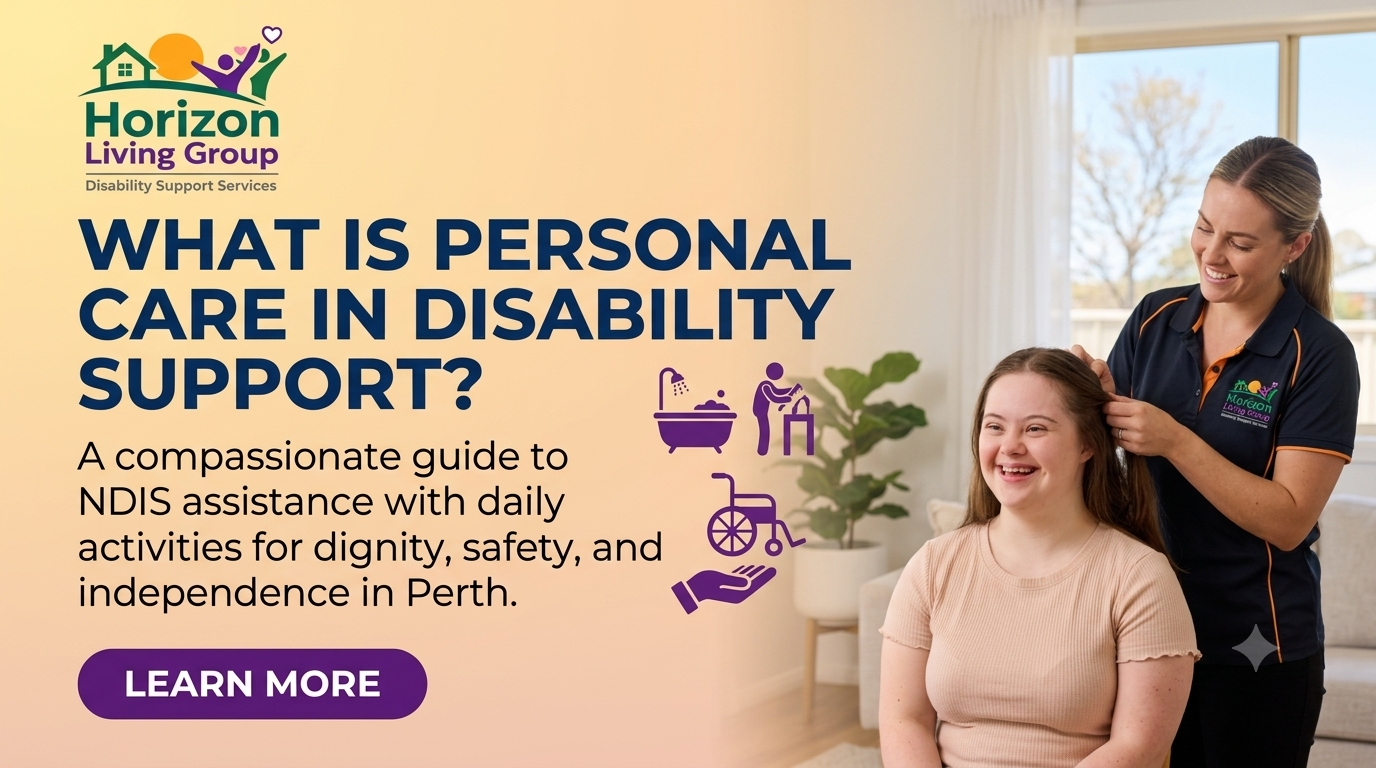
What Is Personal Care in Disability Support?
Personal care in disability support means hands on help with everyday physical tasks like bathing, dressing, grooming, toileting and getting around safely. For people living with disability in Perth, personal care NDIS support isn’t just about hygiene. It’s what allows someone to stay safe at home, feel comfortable in their own body, and hold onto a sense of independence that’s easy to take for granted until it’s gone.
If you’re trying to work out what personal care actually looks like day to day, how it fits into an NDIS plan, or what a support worker will actually do when they show up, this guide walks through it in plain language.
Key Takeaways
Personal care covers things like bathing, dressing, grooming, toileting, continence support and help with mobility.
It sits under Core Supports in an NDIS plan, specifically the Assistance with Daily Life category.
Assistance with personal activities in Perth is provided by trained workers who understand privacy and personal dignity.
No two personal care plans look the same. They’re built around the person, not a checklist.
Picking a provider with the right experience matters more than most people realise at first.
So What Does Personal Care Actually Involve?
At its core, personal care is support with anything related to a person’s own body and physical comfort. Most people wake up and shower, get dressed, brush their teeth, without giving it a second thought. For someone with a physical, intellectual, sensory or neurological disability, those same tasks can range from mildly difficult to completely impossible without another person’s help.
But it’s worth saying this clearly: personal care isn’t only physical. There’s a real emotional side to it too. Someone who feels clean, dressed well and cared for tends to have better days, more confidence, and more willingness to get out and be part of their community.
What Falls Under Personal Care Support?
Every plan is different, but a few things come up again and again.
Help With Bathing and Showering
This might mean getting in and out of the shower safely, washing, or using mobility equipment in wet areas without risking a fall.
Dressing and Grooming
Choosing clothes, getting dressed, brushing hair, oral hygiene, the small routines that shape how someone feels about themselves each morning.
Toileting and Continence Support
Handled quietly, respectfully and with as much privacy as the situation allows. This is often the area people feel most anxious about, and good workers know that.
Getting Around Safely
Moving through the home, transferring from bed to wheelchair, or simply having someone nearby in case a step goes wrong.
Skin Checks and General Hygiene
Particularly important for people with limited mobility, where a missed skin check can turn into a much bigger problem down the track.
In practice, assistance with personal activities in Perth is often bundled with other everyday supports, things like meal prep or light housework, depending on what’s actually written into someone’s plan.
Where Does the Funding Come From?
Personal care sits inside the Core Supports budget, under a category called Assistance with Daily Life. It’s one of the more flexible parts of an NDIS plan, which means the funding can stretch across different types of support rather than being locked to one narrow use.
Looking at NDIS Quarterly Report data, Assistance with Daily Life consistently ranks as one of the most heavily used support categories across the country. That’s a fairly clear signal of just how essential this kind of everyday help is.
How much funding someone gets depends on a few things. Their level of need, their living arrangement, and often an assessment from an occupational therapist or other allied health professional.
Who Actually Delivers This Support in Perth?
Trained disability support workers, usually through registered or unregistered NDIS providers, are the ones doing the day to day work. Around Perth, plenty of providers offer personal care NDIS services that can happen at home, out in the community, or during errands and outings.
The best workers do more than tick off tasks though. They take time to build trust, learn what someone actually prefers, and read the room when it comes to comfort and communication style. That relationship piece matters as much as the technical skill.
Why This Kind of Support Actually Matters
It’s easy to reduce personal care down to a list of chores. But it’s really about dignity, safety and how much control a person has over their own daily life.
Go without proper support and the risks stack up quickly, skin infections, falls, isolation, a slow slide in mental health. Get it right, and people tend to report feeling steadier, more confident, and more ready to chase other goals, whether that’s study, part time work or just getting out more.
Support coordinators around Perth often mention that participants who get well matched personal care tend to make faster progress on other goals in their plan too, things like community access or moving toward employment.
How Does a Personal Care Plan Actually Come Together?
There’s usually a process behind it, even if it doesn’t always feel formal.
First, an assessment of daily living needs, often with input from an occupational therapist. Then a conversation about routines, preferences and anything culturally important to the person. From there, clear goals get set, maybe more independence, maybe better safety at home. The person gets matched with a worker whose style fits them. And the whole thing gets reviewed regularly, because needs shift over time.
That’s why assistance with personal activities in Perth should never look identical from one participant to the next.
What Makes a Good Personal Care Worker?
Not everyone is cut out for this work, and that’s fine, it’s a specific skill set. The workers who tend to do it well usually have a good mix of patience and clear communication. They’ve had training in manual handling and safe transfers. They understand consent, privacy, and something called dignity of risk, letting someone make their own choices even when it’s not the safest option. First aid knowledge helps. So does genuine cultural awareness and a willingness to respect what someone actually wants, not just what’s easiest.
Because personal care involves close contact and sensitive routines, trust isn’t optional. It’s the whole foundation.
Choosing the Right Provider in Perth
A few questions are worth asking before committing to any personal care NDIS provider. Are they registered with the NDIS Quality and Safeguards Commission? Do their workers get ongoing training, or was it a one off induction years ago? Can they actually offer consistent staffing, rather than a new face every fortnight? Is there flexibility if needs change? And do they communicate clearly with the participant and their family, rather than around them?
This decision tends to matter more than people expect going in, since it shapes daily comfort and safety for a long time.
The Challenges Nobody Really Talks About
Plenty of participants feel awkward at first about having someone help with private tasks. That reaction is completely normal, not a sign anything’s wrong. A good provider takes it slow, explains each step, and hands as much control back to the participant as possible.
Inconsistent staffing is another common frustration. Different worker every week, and trust never really gets the chance to build. It’s one of the most common complaints in NDIS participant feedback, and one of the easier things a good provider can actually fix.
Conclusion
Personal care in disability support goes well beyond finishing a checklist of daily tasks. At its heart, it’s about protecting someone’s dignity, health and independence while giving them room to live life on their own terms. For NDIS participants in Perth, personal care NDIS support paired with genuinely tailored assistance with personal activities in Perth can shift everyday life from something to get through into something far more comfortable and manageable.
Whether it’s help with bathing, getting dressed, moving around safely or general hygiene, the right plan and the right person delivering it can change everything. Taking the time upfront to understand funding, provider quality and personal preferences means personal care support actually does what it’s meant to do.
Frequently Asked Questions
What counts as personal care under the NDIS?
Personal care covers things like bathing, dressing, grooming, toileting and mobility support. It’s funded under Core Supports, specifically Assistance with Daily Life.
How much personal care funding will I actually get?
It depends on your individual needs, your living situation and any assessments completed. An occupational therapist’s input often helps set the right level.
Can I pick who provides my personal care in Perth?
In most cases, yes. Providers usually let participants request a worker who fits their preferences and communication style.
Does personal care support happen at home?
Yes, most of the time it’s delivered right at home, though it can extend into community settings when needed.
What if I feel uncomfortable with personal care at first?
That’s a common reaction and nothing to worry about. A good provider explains each step and lets you set the pace as trust builds.